

Café · Houston · ⭐ 9.3/10 · 508 reviews · updated: 2026-08-10 17:38:43
Address: 3217 Milam St, Houston, TX 77006, United States
The name is the order. In Italy you do not ask for an espresso — you ask for un caffè, and you drink it standing at the bar while whoever is working greets you by name. That ritual is what a Korean-born roaster with a wall of technical certifications chose to build in the middle of Midtown Houston, in a ninety-year-old building he spent fourteen months gutting, with a glass window at the back so you can watch the beans being roasted while you drink them.
Highlights
- A working roastery, not a café that buys in. Three separate roasting machines sit behind a viewing window at the back: a production PROBAT, a tiny sample roaster for evaluating lots, and a mid-size machine for small batches.
- The founder is a certified Q Arabica Grader and an SCA Trainer. That is the professional end of the industry — the credentials for scoring green coffee and for teaching other people to do it, not a weekend course.
- Italian in form, global in content. Red, green and white run through the room and the counter works like an Italian bar, but the beans on the shelf are single origins from Ethiopia, Colombia and Brazil alongside a house espresso blend.
- Water treated as an ingredient. A high-efficiency reverse-osmosis system was installed before the doors opened, which is the sort of investment nobody notices and everybody tastes.
- Fourteen months of renovation in a ninety-year-old shell. The space was a scooter-rental shop before; the founder rebuilt it himself into a roastery and bar of roughly nineteen hundred square feet.
- “No jargon, no BS, just great coffee, made simple.” The shop’s own line, and an unusual position for a room this technically equipped — the expertise is in the machinery, not in the conversation.
What’s in the cup
This is one of the few cafés in Houston where the whole chain sits under one roof, and that changes what is possible in the cup. Green coffee is evaluated on a hundred-gram sample roaster, roasted for production on a PROBAT, and finished in small batches on a mid-size machine — three tools for three different jobs, which is exactly how a serious roasting operation is set up and exactly what a café buying from a wholesaler cannot do. Beans are roasted fresh, with retail orders roasted and shipped the following day rather than pulled off a shelf.
The lineup runs to genuine single origins — a natural-process Ethiopian from Guji, a Colombian from Huila, Brazilians including an unusual lot with grape and starfruit character — plus a house espresso blend built for weight and for milk. That range tells you the roaster is not choosing between the two schools of modern coffee: the light, fruit-forward filter side and the dense, chocolate-forward espresso side both get their own material rather than one blend being asked to do everything.
Then there is the water. A high-efficiency reverse-osmosis filtration system went in before opening, which sounds like plumbing and is in fact one of the largest single variables in how coffee tastes. Most cafés inherit whatever comes out of the municipal supply; this one decided what its water would be. Combine that with a green-coffee grader choosing the lots and you have a room where every controllable variable has actually been controlled.
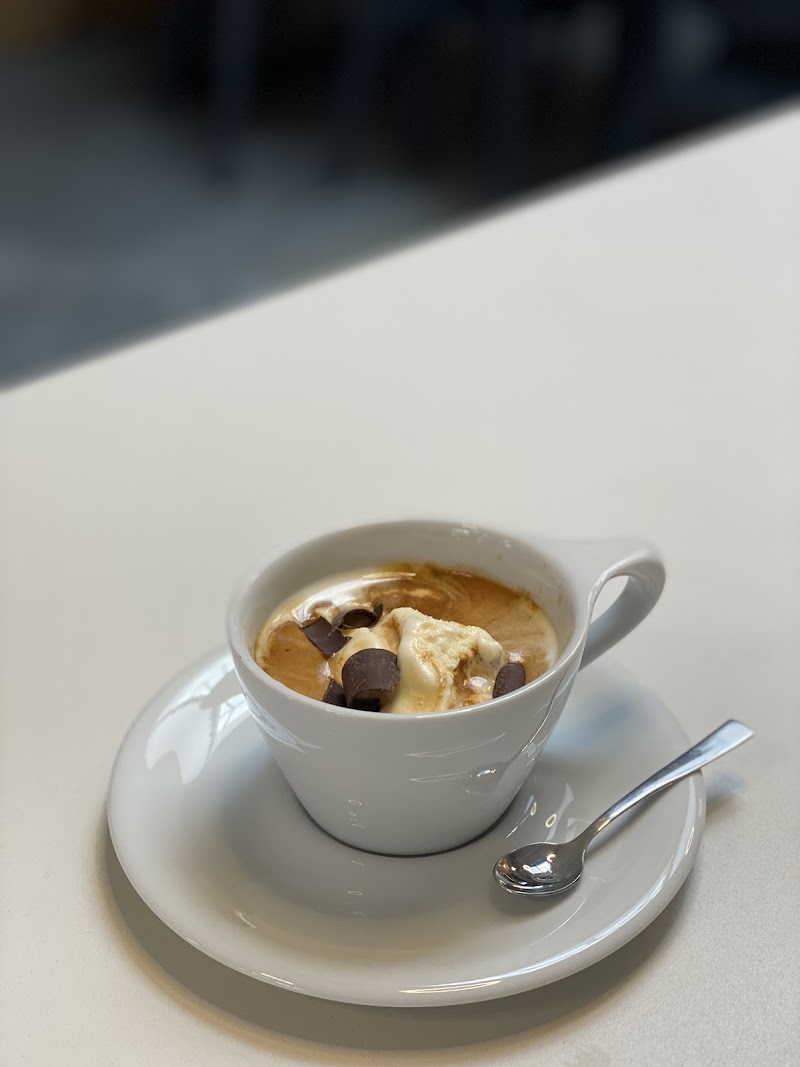
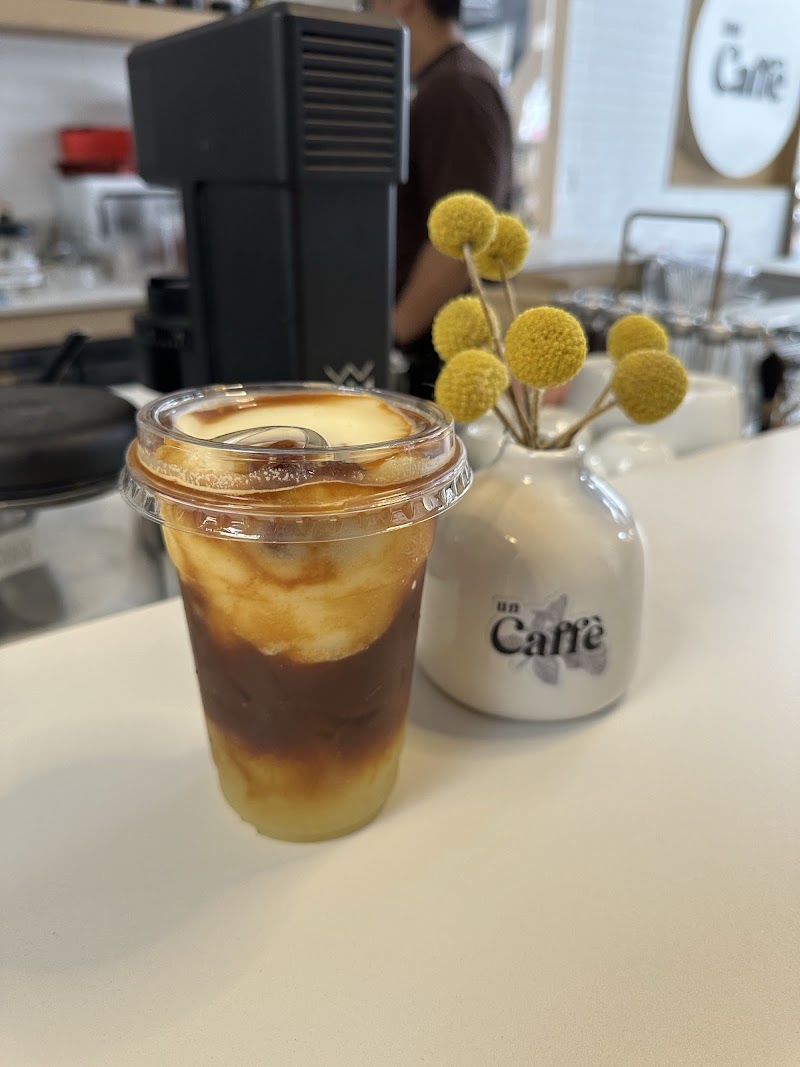
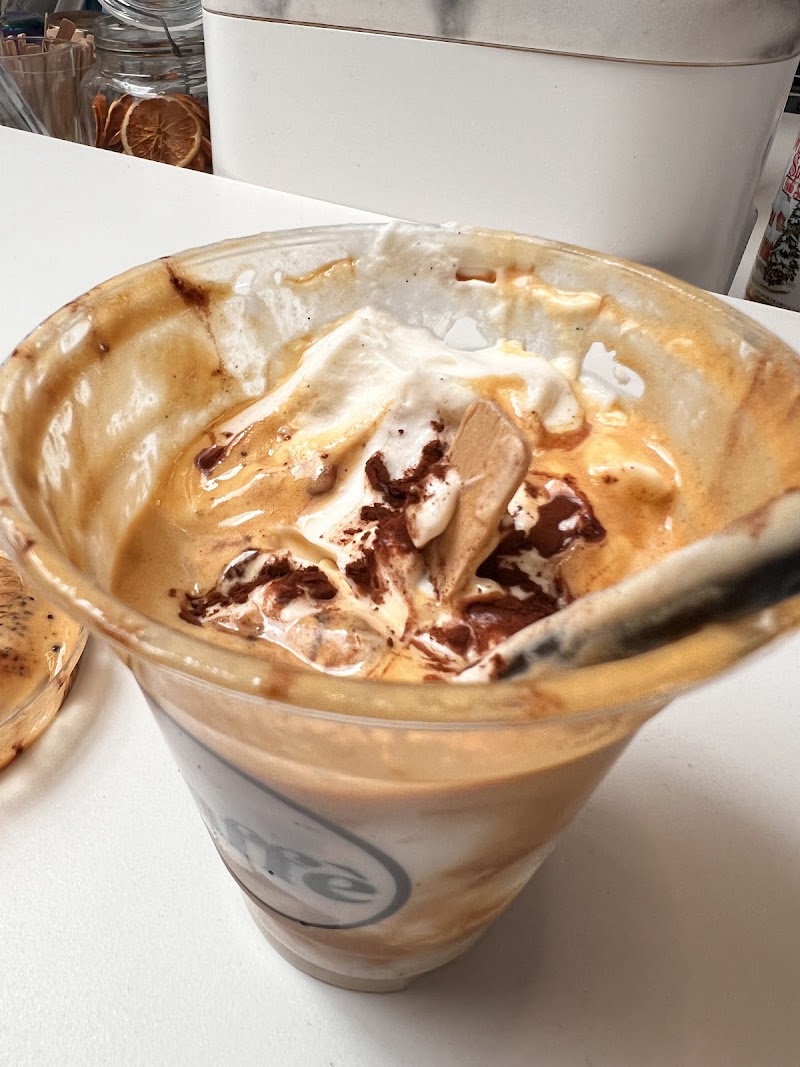
Brewing covers both directions — espresso and its milk drinks for the bar-side ritual, pour-over and drip for people who want the origin to speak, cold brew for the Houston summer. The counter also keeps an einspänner, the Viennese espresso under a cap of whipped cream, which is worth noticing: it is a staple of Korean café culture as much as an Austrian one, and its presence under an Italian sign is the clearest hint that this room has more than one homeland.
Who’s behind it
Un Caffè is the project of Soonkack Kook — founder, roaster and, most days, the person actually at the bar. He came to the United States from Korea for college around two decades ago and has worked in restaurants and coffee since 2008, most recently at a well-known café in the Heights before going out on his own. Along the way he collected the credentials that the specialty industry takes seriously: Q Arabica Grader, which qualifies him to score green coffee to an international standard; SCA Trainer, which qualifies him to teach; plus a coffee skills diploma and a technician certification.
What makes the place interesting is that none of that is used as a weapon. The shop’s own stated position is a refusal of jargon — great coffee, made simple. A person with a grader’s palate could easily have built a room that intimidates; instead he built one modeled on the Italian bar, where the defining behavior is that the person behind the counter greets you and the transaction is short, warm and unpretentious. The technical depth is real and it lives in the back, behind glass, where it belongs.
He also did the physical work. The building is around ninety years old and had last been a scooter-rental shop; the renovation took fourteen months and produced a roastery, a retail bar and a roasting room in roughly nineteen hundred square feet. That is a long time to spend on a small space, and it shows in how deliberately the room is laid out.
Which visit it suits
The purest use of this place is the short, focused one. Come in, order at the bar, drink it, talk to whoever made it, leave. That is the Italian model the shop is built on, and it is genuinely rare in a city where coffee is normally consumed through a car window. If you have twenty minutes and any curiosity at all, this is the best twenty minutes of coffee in Midtown, and the person serving you can answer any question you have about what is in the cup.
The second scenario is the taste-and-take-home. Because the roasting happens on site and the retail shelf is stocked with what was roasted this week, this is a place where you can drink a single origin as a pour-over and then walk out with a bag of the same coffee. For anyone who brews at home, that combination — try it prepared properly, then buy it fresh — is the entire reason roastery cafés exist, and Houston does not have many of them.
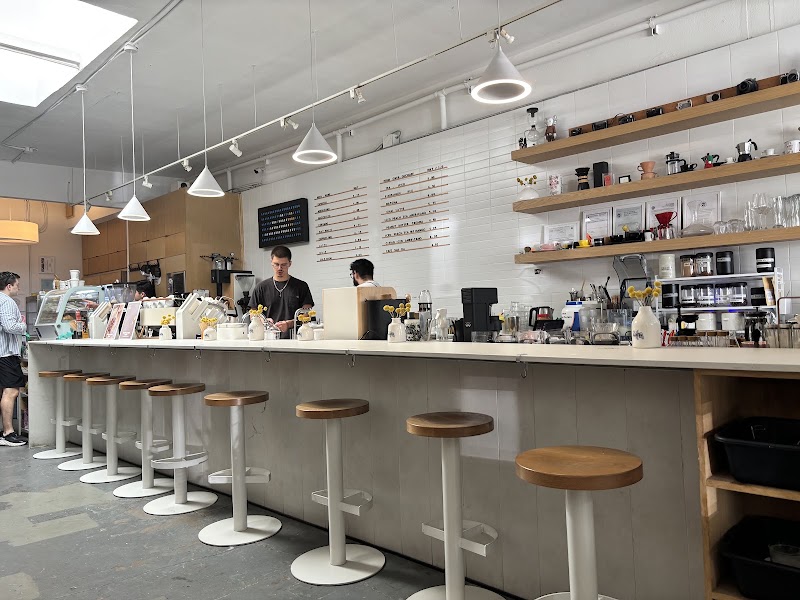
For laptop work, temper expectations. There is banquette seating along the wall facing the counter, so sitting down is entirely normal here, but this is a compact roastery bar of a couple of thousand square feet rather than a sprawling work café, and it does not publish a policy on outlets, Wi-Fi or how long you may stay. A focused hour or two with a notebook or a laptop fits the room; a full remote working day does not, and the Heights and downtown have better-equipped options for that. The meeting scenario, on the other hand, works well — two people, a banquette, and coffee good enough to carry the conversation.
The space and the atmosphere
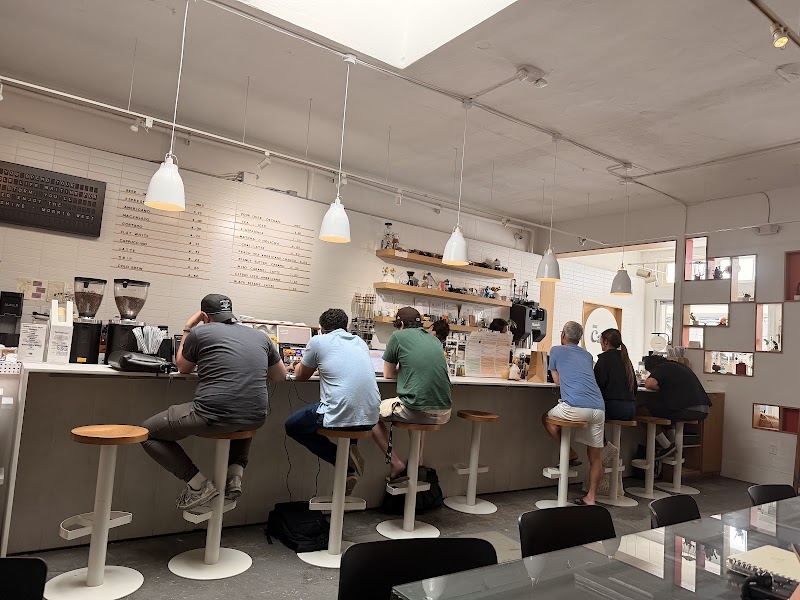
The interior is contemporary and unmistakably themed: red, green and white, an open homage to the country that invented espresso, applied without turning the room into a trattoria pastiche. Banquette seating runs opposite the service counter, which puts customers face to face with the work rather than tucked into corners. The single most distinctive architectural decision is at the back, where a large window opens onto the roasting room — the roaster is not hidden in a warehouse somewhere but is part of the room’s daily theater.
Because the footprint is modest and the layout is bar-forward, the atmosphere is closer to a busy neighborhood counter than to a library. It is a talking room. When the roaster is running you get the smell, which is the single best thing about drinking coffee where it is made and something no amount of interior design can fake. When it is not, the room is calm enough for a conversation without raised voices.
The shelf matters too. Retail bags, brewing gear, mugs, shirts and tea are all part of the room, so the space works as a shop as well as a bar — a small but real difference from a café where the merchandise is an afterthought near the register.
Beyond the coffee
An honest section, because the honest answer is short. Un Caffè is a coffee-first business and does not present itself as a food destination. The public record covers the drinks program in detail — espresso and its milk builds, filter and drip, cold brew, the einspänner, plus chai, matcha and hot cocoa for the non-coffee half of any table — and says essentially nothing about a kitchen or an in-house bakery. There is a tea offer, and there are retail goods, but nobody should arrive expecting brunch.
That focus is a feature rather than a gap. A nineteen-hundred-square-foot building that houses three roasting machines and a roasting room has spent its space on production, not on a kitchen, and the trade-off is visible in the cup. Plan to eat before or after and come here for what it actually does. Midtown has no shortage of food within a short walk.
When to come
The shop keeps daytime hours rather than the all-evening pattern of the bars around it, so this is a morning and afternoon destination, not a nightcap. That fits both the Italian model — coffee is a daytime punctuation mark, not an evening event — and the practicalities of a business whose owner is also the roaster.
If you want to see the roasting room in action, come earlier rather than later in the day, and be aware that roasting is a scheduled task rather than a continuous one, so it is a bonus and not a guarantee. If you want a conversation with the person who selected and roasted your coffee, avoid the weekday morning peak, when Midtown’s commuters and residents are all ordering at once. Weekend mid-mornings are busy in a pleasant way; weekday afternoons are the quietest window, and the best time to try something unfamiliar as a pour-over.
Getting there
You are in the heart of Midtown, a block off the light-rail spine that runs from downtown through Midtown to the museum and medical districts — which means a Red Line platform is a short walk away and the shop is genuinely reachable without a car from a large slice of the city’s inner core. Around it sits Midtown’s dense cluster of bars and restaurants, so the café is embedded in a walkable pocket rather than stranded in a strip center.
By car, this is Midtown rather than downtown, and the parking situation reflects that: spaces along the surrounding blocks are usually findable during the day, and get tighter in the evening when the neighborhood’s bars fill up — which, given the shop’s daytime rhythm, mostly is not your problem. From Montrose, downtown, EaDo or the Museum District it is a very short drive; from the Heights, allow for the usual crawl on the inner loop.
Good to know
Ask what is fresh. In a room where roasting happens on site, the useful question is not what is on the menu but what came off the roaster most recently, and the person behind the counter is qualified to give you a real answer rather than a scripted one. If you drink coffee black and want to understand what the shop can do, order a single origin as filter; if you drink it with milk, the house espresso blend was built for exactly that job.
Two limitations worth setting out plainly. First, this is a small footprint with a working roastery inside it — excellent for a focused visit and for buying beans, not designed as an all-day workspace, and no laptop, Wi-Fi or outlet policy is published. Second, food is not the point here; the shop’s public presentation is entirely about coffee, and anyone hoping for a full plate should plan around that. What you get in exchange is a level of control over the product — green coffee grading, on-site roasting, treated water — that almost no café in the city can match.
Questions and answers
Do they actually roast on site?
Yes, and it is the reason the shop exists. There are three machines behind a viewing window at the back: a PROBAT for production, a hundred-gram sample roaster for evaluating green coffee, and a mid-size roaster for small batches. Retail orders are roasted fresh and shipped the next day.
What is a Q Arabica Grader, and why should I care?
It is an internationally recognized certification for scoring green coffee to a standard — effectively a licensed palate for buying raw beans. Combined with the founder’s SCA Trainer credential, it means the person choosing the lots is qualified at the professional end of the industry, not selecting by catalog description.
Why is a Korean-born roaster running an Italian-themed café?
Because the Italian bar is a model of hospitality, not an ethnicity: greet every guest, serve quickly, keep it unpretentious. The name itself is simply how you order an espresso in Italy. The Viennese-style einspänner on the counter — a fixture of Korean café culture as much as Austrian — quietly signals that more than one tradition is at work here.
Can I buy beans to take home?
Yes. Retail bags are sold in the shop and online, covering single origins and the house espresso blend, and there is a wholesale program for businesses. Buying where the roasting happens means the bag is genuinely fresh rather than shelf-aged.
What should I order on a first visit?
If you drink coffee black, a single origin as a pour-over — that is where on-site roasting shows itself most clearly. If you take milk, the house espresso blend was built with weight for exactly that. If you want something you are unlikely to find elsewhere in the neighborhood, the einspänner.
Is it a good place to work with a laptop?
For an hour or two, yes — there is banquette seating facing the counter. But this is a compact roastery bar rather than a work café, and no policy on Wi-Fi, outlets or how long you can stay is published. For a full remote working day, choose somewhere built for it.
Is there food?
Not as a headline. The business presents itself as coffee-first, with a drinks program covering espresso, filter, cold brew and non-coffee options, plus tea and retail goods. There is no publicly documented kitchen or in-house bakery, so plan to eat elsewhere.
Do they teach classes or run cuppings?
The founder is a certified SCA Trainer, which is the qualification for teaching, but no public class schedule is documented. If you want to learn something, the realistic route is to ask at the bar — the shop’s stated position is plain answers without jargon.
Where is it and how do I get there?
Midtown, a block from the light-rail corridor that links downtown with the museum and medical districts, inside the neighborhood’s walkable bar-and-restaurant cluster. Street parking around the surrounding blocks is generally workable during the day, which is when the shop is open anyway.
Opening hours
| Day | Hours |
|---|---|
| Monday | 07:00–18:00 |
| Tuesday | 07:00–18:00 |
| Wednesday | 07:00–18:00 |
| Thursday | 07:00–18:00 |
| Friday | 07:00–18:00 |
| Saturday | 07:00–18:00 |
| Sunday | 07:00–18:00 |
Photos
Visitor reviews
Reviews last updated: 2026-08-10 17:38:43
Data is refreshed monthly. Sources: houstonka.com and editorial picks based on reviews.
Інтер'єр комфортний, що робить його гарним місцем для роботи або спілкування. Коли багато людей, може бути трохи шумно, але не надто. У них широкий вибір кави, однією з їхніх фірмових страв є Einspanner, кава, натхненна…
Чудова кав'ярня та чудова кава. Айншпаннер був неймовірний і відчувався як унікальний варіант крижаного лате, не надто солодкий і не гіркий, ідеальний. І чудовий смак еспресо.
Just wow. Wha a vibe. Love this place. The coffee is def delicious and the atmosphere and customer service 10/10
Got the Einspanner which is basically tiramisu as a coffee drink. Insanely creamy and delish.
The black…
Загалом, справді класне кафе. Гарна атмосфера, приємно працювати. Einspanner був на висоті. Манговий холодний чай розчарував, оскільки манго було заморожене, а не свіже. Несмачне та надто холодне, щоб насолоджуватися. Їх…
Гарні напої, але не виняткові. Їхня випічка занадто дорога для такої якості. Бариста завжди дуже приємні та милі. Центральне розташування цього кафе робить його зручним місцем для зупинки під час прогулянок. Однак, напої…